
If everything is wireless why do I need to spend money for network wiring? This is a great question asked by many of our clients during our design and budgeting meetings. It does seem counterintuitive doesn’t it?
Wireless is an addendum to a properly wired home. We recommend pulling wire for data outlets in homes larger than a studio apartment. A properly wired home will benefit you with higher reliability and functionality now and in the future. While it is true that many devices in your home can operate on a wireless network it is important to understand the impact of that decision.
Wireless networks have finite coverage and bandwidth. Coverage refers to how much of your home and outdoor living areas have reliable access  to the wireless signal. Bandwidth is really a synonym for data transfer rate. This is the amount of data that can be carried from one point to another in a given time period (usually measured per second).
Families want quick and reliable streams of data are you likely to use? Your heaviest data usage comes from the use of Netflix, Hulu, and You Tube when you are streaming video from the internet. Pandora and Spotify use data when you are playing your favorite music. Data is used when you are uploading your photos to the cloud, or playing online games.
If you only have a single wireless connection in your home and one person is watching a movie on Netflix while another is listening to Pandora while yet another is playing games the user experience will suffer. You will have to endure the spinning circle indicating that the data is loading and not everyone in your home will be able to enjoy using their wireless devices.
This reality is even more pronounced in homes over 3,000 square feet where multiple wireless access points are needed to cover a larger area. Wireless bandwidth is like a pie and there are only so many slices of pie. Activities like watching a movie on Netflix can eat up to 80% of that pie. Wired devices have access to much greater bandwidth (their own pie), and save the “wireless pie bandwidth” for other wireless devices, like cell phones, that need it. We recommend pulling wire to every television, telephone and electronics location so you have reliability now and flexibility later. In the long run, it will save you money, and everyone can have pie!
As a starting point, Artistic Systems recommends pulling 1 RG6 (for television service) and 1 CAT5E or CAT6 (Data/Ethernet) cable to every television location. Every location that would normally have a phone should also have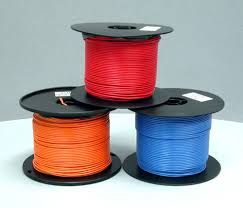 2 CAT5e or CAT 6 wires that can be used for phone and data. Having these hard wire options in your home will provide your bandwidth-hungry devices the data they need to operate properly without causing congestion on the wireless network. This configuration allows you to add additional wireless access points that are hard wired to the network which will ensure the fastest wireless speeds.
A typical home will have a modem (this is the box connected to the outside internet world) and a wireless router. Some will have a combination of these devices in a single box, like a DSL wireless router.
The wireless router serves as the wireless connection for laptops, cell phones and any WiFi enabled device. In a larger home, wireless access points are added to increase wireless coverage. While this works, roaming around the house wirelessly or sitting between two access points can cause dropouts in data. Cell phones are particularly “sticky” devices meaning once they are connected to a Wi-Fi access point, they will try to hold that connection as long as possible even if there are Wi-Fi access points that are closer. This results in slow or even nonexistent data until the connection fails. The device will then look for the strongest access point and connect to it. This is where a managed Wi-Fi network improves connections and reliability.
A managed Wi-Fi network is made up of hardwired data connections to the Wi-Fi access points. These access points are managed by a wireless controller. This controller keeps track of which access point individual devices (like a cell phone)  are connected to, what other access points are nearby, and what kind of signal those devices are getting. The controller makes real time decisions about which access point to use and decides which one any single device should be using. From the cell phone’s point of view, it only sees a single access point and does not have to reconnect when moving around the house. In a managed network, the net effect is a great Wi-Fi experience, all enabled by actual wires in the wall.
So, to answer the original question about whether or not you need to pull w ire for wireless devices, the answer is a clear yes if reliability and strength of signal is important. That is why Artistic Systems prefers to provide you with a smart wiring plan for your home. We look at your home plan and construction materials so we can marry them to your lifestyle.
Let Artistic Systems help you design your Home Theater, Media Room or Listening Space and create the perfect plan for your Home Electronics System….and maybe pull some wire too!

A true “sound” guy. Charlie Colwell is the Owner and President of Artistic Systems in Telluride, Colorado. Originally from Texas, he started his official career as a musician as the lead singer and bass player and later in his dream job working as a Sound Engineer for Sugarhill Studios in Houston, TX. After earning a Bachelor’s Degree in Radio, Television and Film he worked at NASA‘s Johnson Space Center as a Sound Engineer connecting the space shuttle to leaders around the globe. These experiences led him to the Residential Electronics Industry when he took the position as Installation Manager for The Groove Audio Video in Houston’s River Oaks until 1996 when he and his wife moved to Telluride and purchased Artistic Systems in 1999.
 In The Media Room | by Artistic Systems